Marvel Strike Force · Battleworld
Designing a new way to play
Shaping a six-day alliance event around a shared fight against Knull, designed to refresh a long-running game without asking players to take on an even heavier weekly grind.
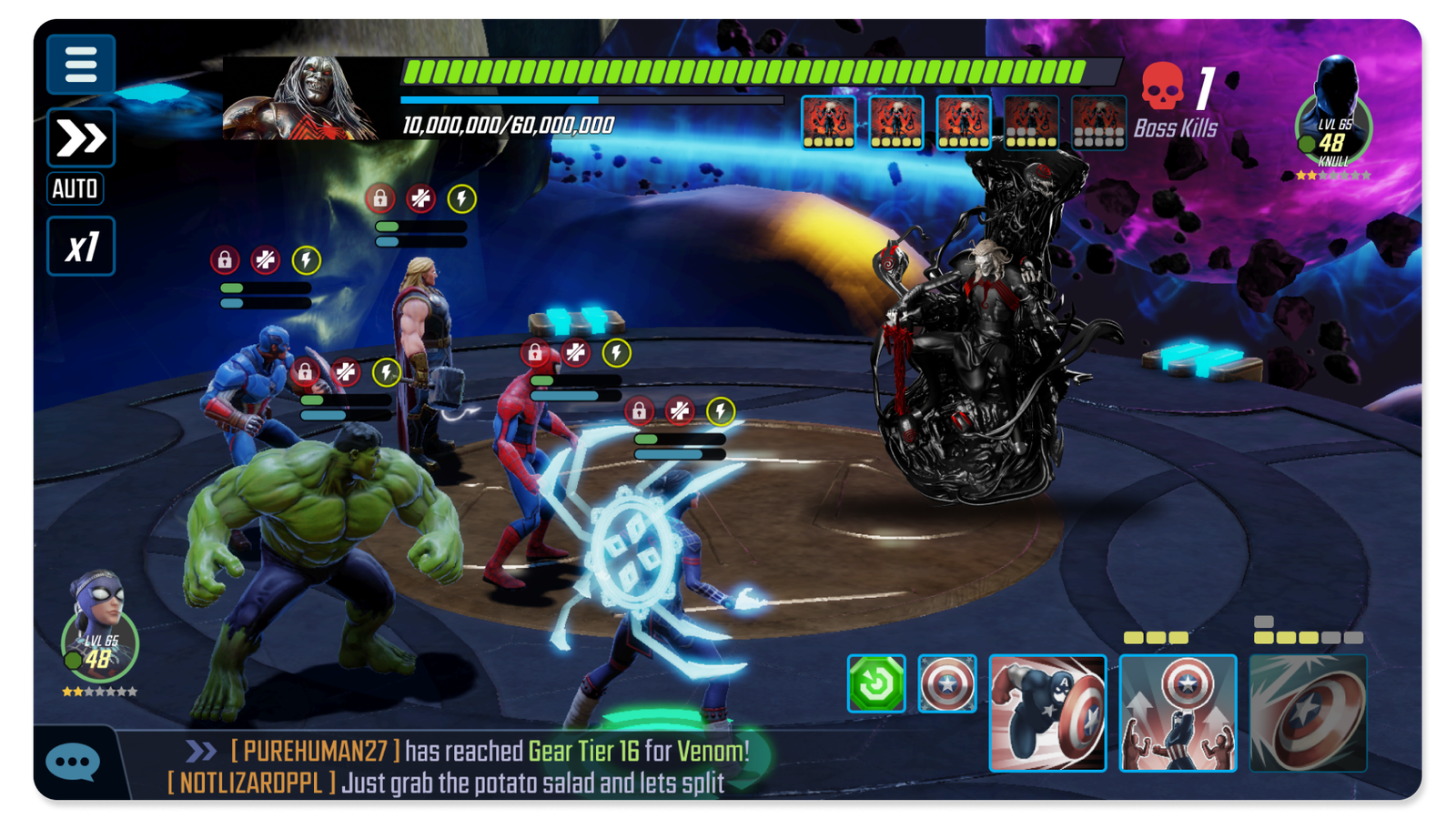
6 days
One alliance event
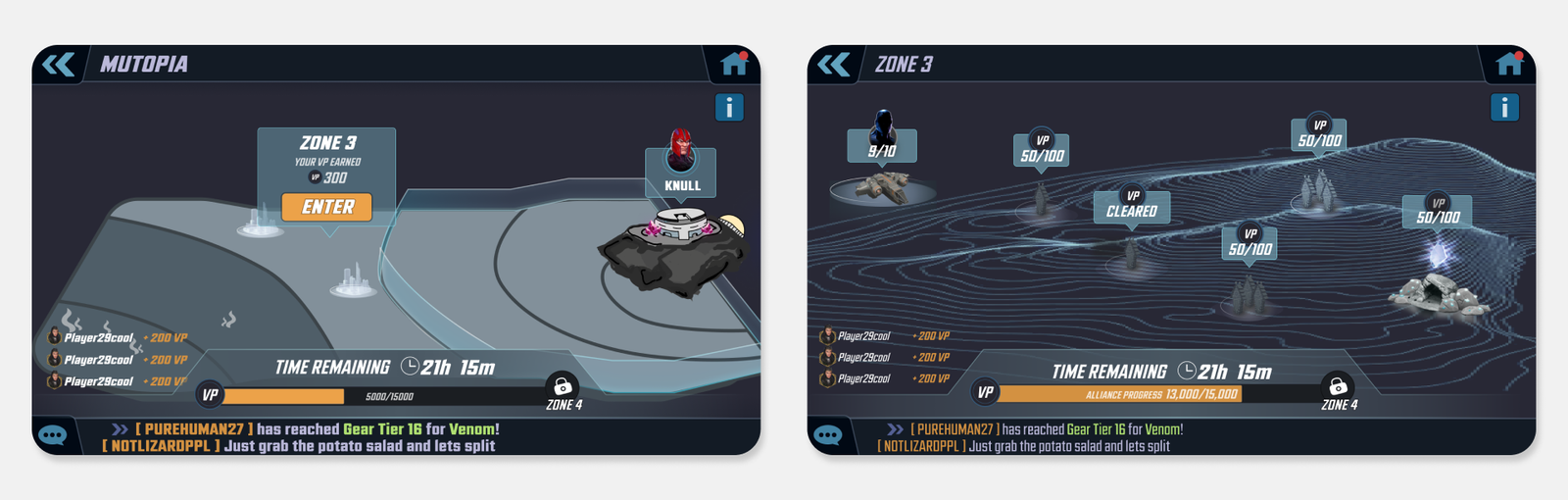
A new zone could unlock each day, leading to the boss on Saturday.
24 players
One shared goal
Alliance members contributed points toward opening the next zone.
Level 50+
Entry point
Battleworld was available to players who had reached the required level.
- My role
- UX Designer · UX lead through launch
- Collaboration
- Product, Game Design, UI, Technology
- Scope
- End-to-end mode experience and interaction design
01 / Product opportunity
Give a mature game a reason to feel new
Marvel Strike Force needed to keep evolving. Its previous new game mode had launched in 2019, and War participation was below expectations: alliance activity and the number of members contributing points were both important signals.
The opportunity was to create a genuinely different alliance experience. The game already asked players, especially endgame players, for substantial weekly play time; a new mode needed to feel worth their attention without adding a long list of extra battles.
The design question
How might we make alliance cooperation feel meaningful while keeping the weekly commitment manageable?
02 / Shared progression
Six days. One alliance moving forward.
Battleworld ran from Monday to Saturday. Each day opened a new zone only after the alliance reached the shared point threshold; the final zone led to the boss fight against Knull. Sunday was a rest day. The story and rewards gave players a common goal: contribute across the week to earn the shards needed to unlock the character.
03 / Designing for participation
Make every contribution visible
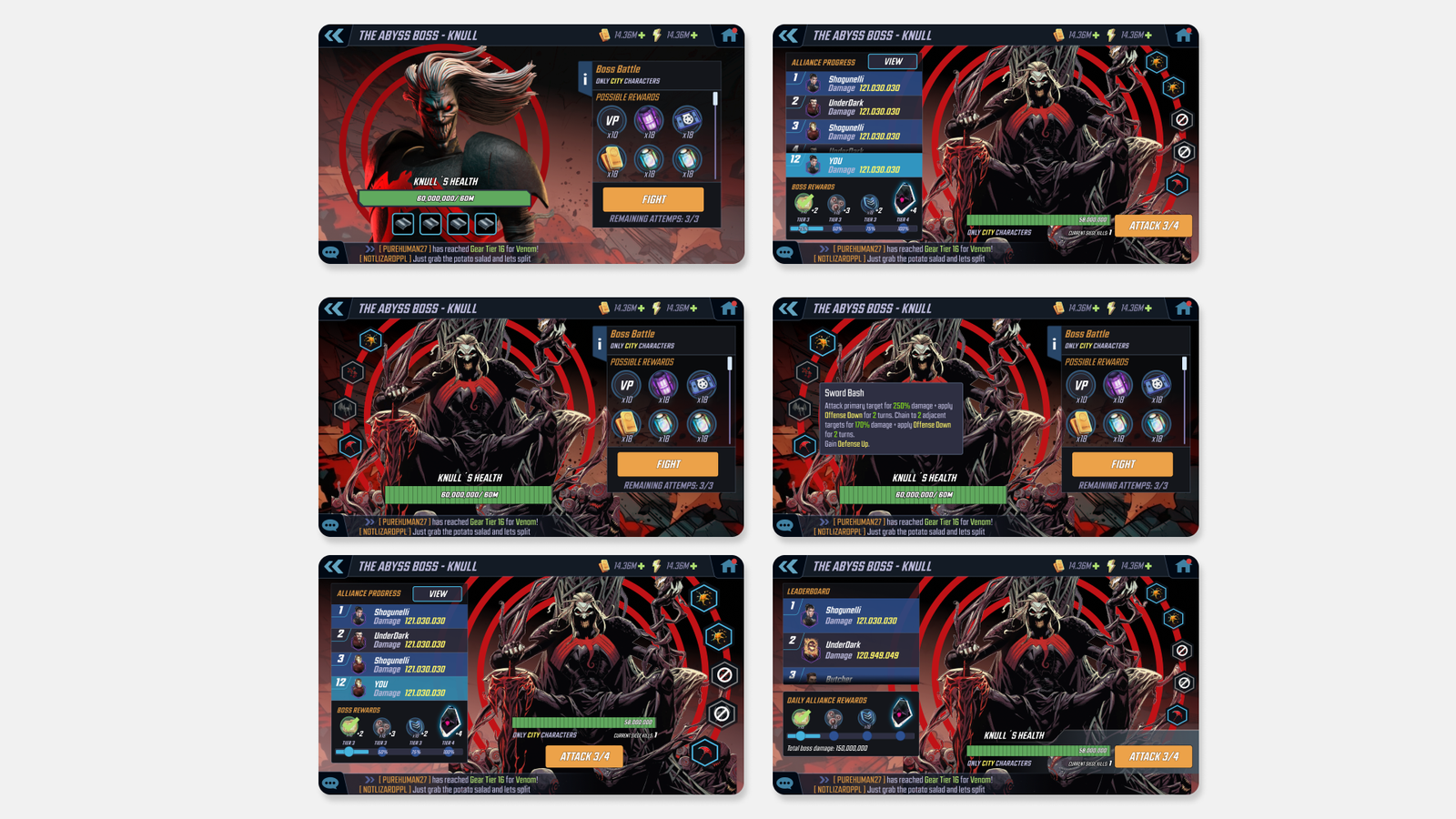
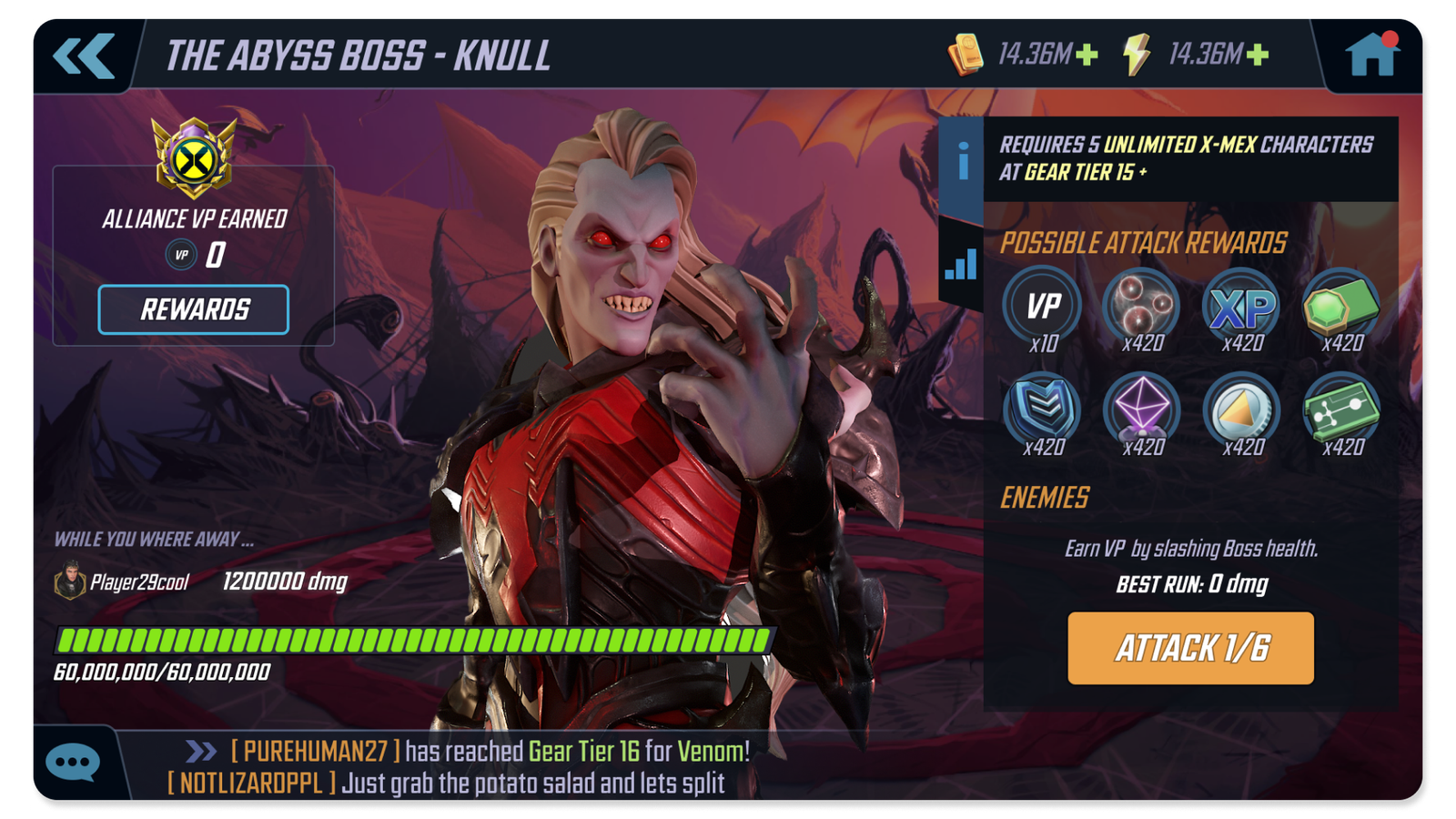
On the final day, the boss screen brought the shared state forward: players saw the latest health bar and a recap of alliance damage dealt while they were away. A leaderboard highlighted top contributors, adding a friendly competitive nudge inside the alliance.
We also explored a per-zone weapon mechanic for Knull. Completing special missions could remove one of his five weapons and its associated trait. In an internal decision with Game Design, we set it aside: each player would otherwise face a different boss state in a fight shared by the whole alliance, making the experience inconsistent and the state tracking technically complex.
04 / Production trade-off
A bigger boss, within the world we had
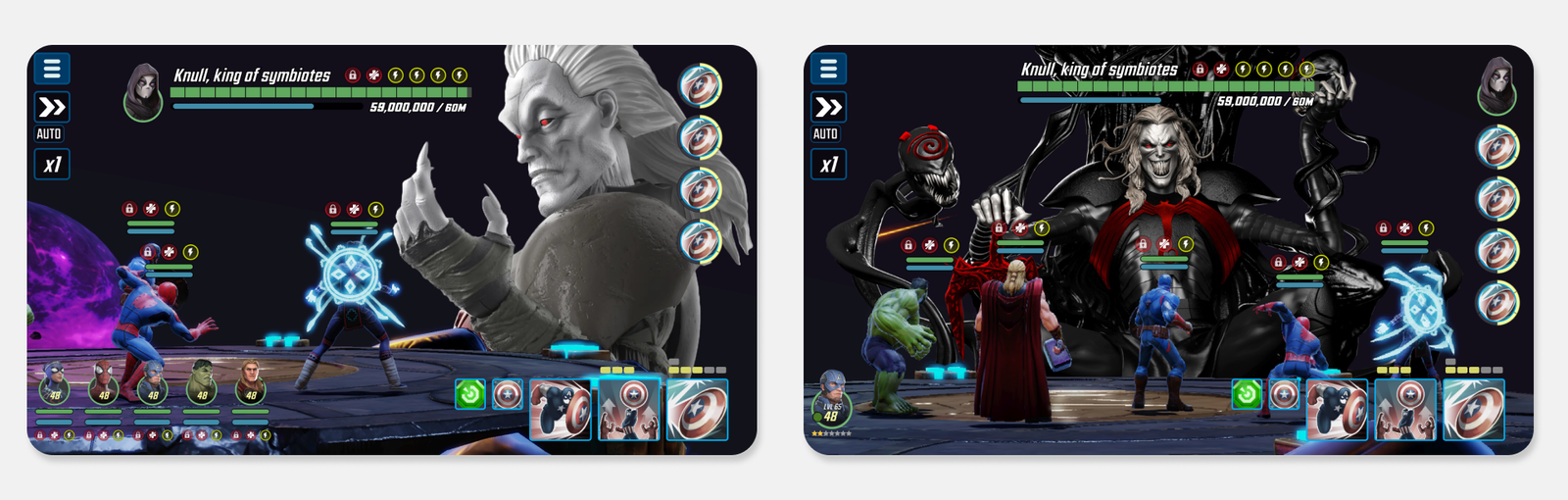
Early concepts explored a new camera angle to make the encounter feel visually distinct and make Knull appear larger. Technology reviews revealed two linked constraints: character animations were authored target by target, and the 3D environments were built for the existing camera, with unfinished areas outside that view. Changing perspective meant reworking nearly 300 character animation setups and the environments, work that the roadmap could not absorb.
We kept the established camera and focused the boss encounter on the shared health pool, repeated alliance attacks, and a stronger on-screen presence within the existing setup.
05 / Playtest iteration
Reduce the load in Spec Ops
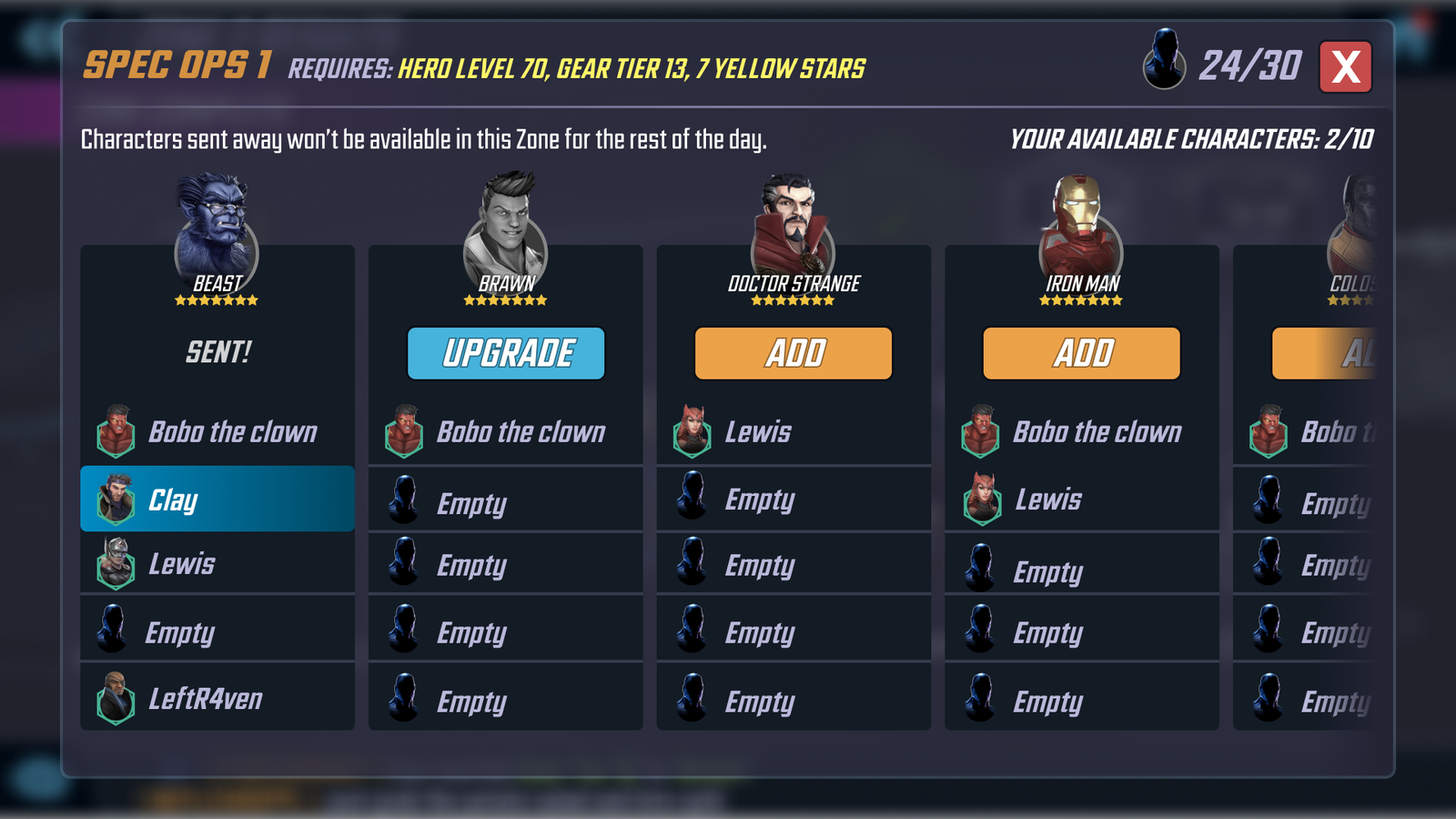
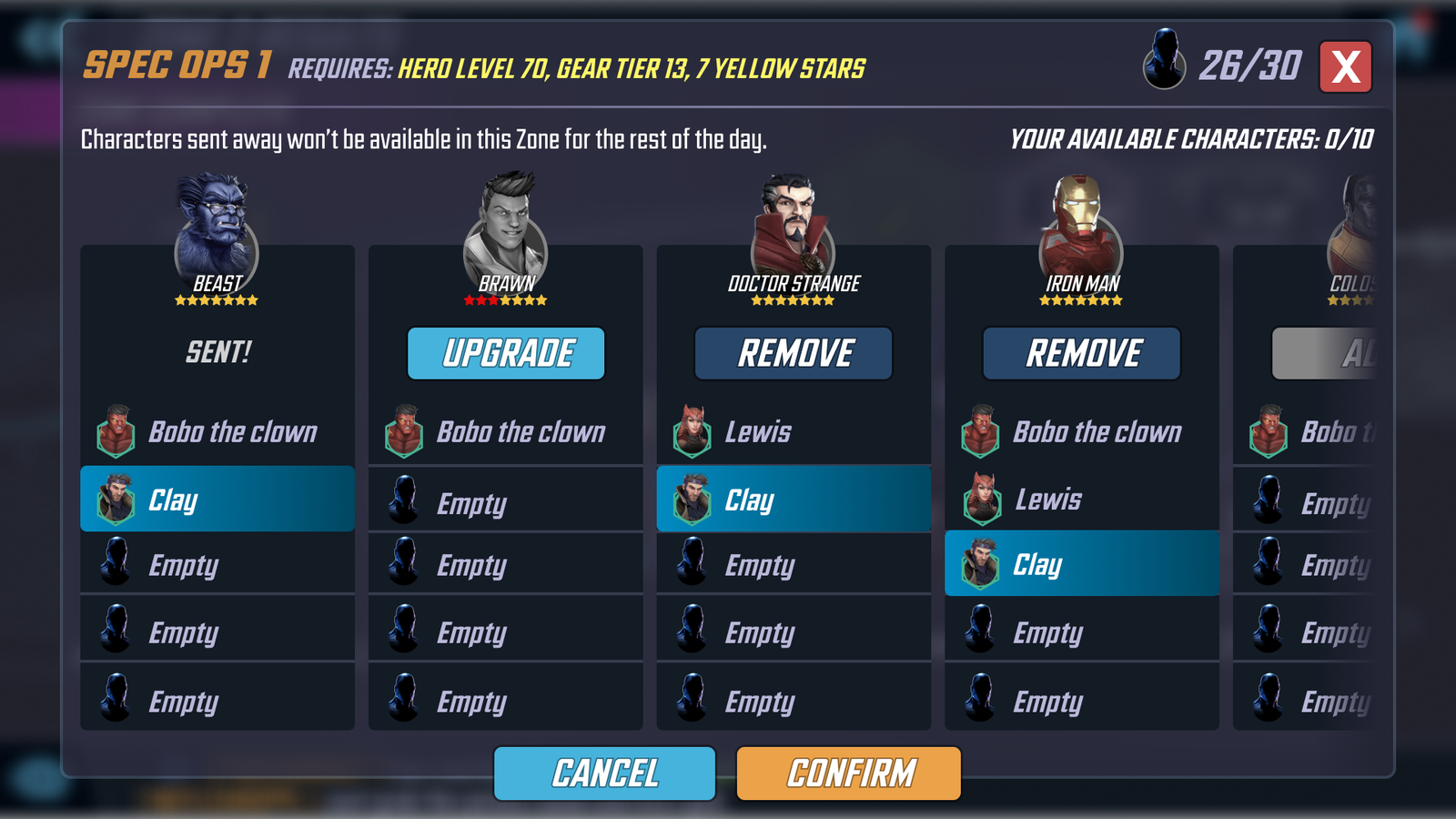
In playtests, players called out the Spec Ops screen as overloaded, and we observed them spending too long there. The flow also asked alliances to assign characters to missions, temporarily removing those characters from other battles in the same zone. We recommended to Game Design that Spec Ops requirements not overlap with characters needed elsewhere in that zone, so players with smaller rosters could still contribute.
We simplified the screen by prioritizing character frames and placing requirements as supporting text beside the mission title. The modal included clear states for available, assigned, and completed characters.
06 / Measurement plan
Define what progress should look like
We planned to evaluate Battleworld with participation and progression signals similar to War, then break them down across alliance tiers and difficulties. I led UX from early support on the final boss flow to the full weekly experience through launch. I left at launch, so I don’t have post-launch performance results to report.
Participation
Members active per alliance
Track how broadly each alliance took part.
Alliance reach
Alliances participating
Compare participation across alliance tiers.
Zone progress
Points and unlocks
Follow progress through each of the six zones.
Time to unlock
Next-zone pacing
See how long alliances needed to reach each threshold.
These are planned success measures, not post-launch results.