Marvel Strike Force · Gacha
Designing a reason to come back
A configurable bonus-reward loop that made progress toward a premium reward visible—without taking the surprise out of each orb opening.
- My role
- UX Designer
- Worked with
- Product, Game Design, UI, Tech
- Scope
- Bonus reward mechanic
Illustrative cover art inspired by the Orb Chamber’s deep blue and cyan reward world.
Cover artwork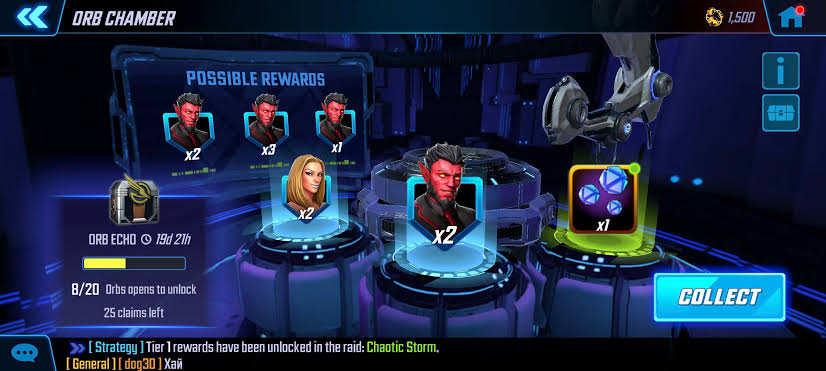
The experience loop
Progress made the next opening matter
A premium reward was guaranteed at the milestone; which reward appeared remained random.
Open an eligible orb
Only configured orbs advanced this counter.
See progress build
Each opening moved the player toward the threshold.
Reach the milestone
A random premium reward became available.
Start the loop again
The counter reset and another milestone began.
01 / Opportunity
Turn a single opening into ongoing progress
We wanted to encourage more participation in a specific orb system by connecting repeated openings to a guaranteed premium reward at a set interval. Similar mechanics in other games offered a useful reference point, but the experience needed to fit Marvel Strike Force’s existing Orb Chamber and reward economy.
The design challenge was to make the goal easy to understand and rewarding to approach, while preserving the anticipation that makes a gacha opening feel like a gacha opening.
The design question
How might progress create a repeatable reason to return?
The product constraint
Keep the mechanic configurable and contained to selected orbs.
02 / Mechanic
Guarantee the reward tier, keep the reveal random
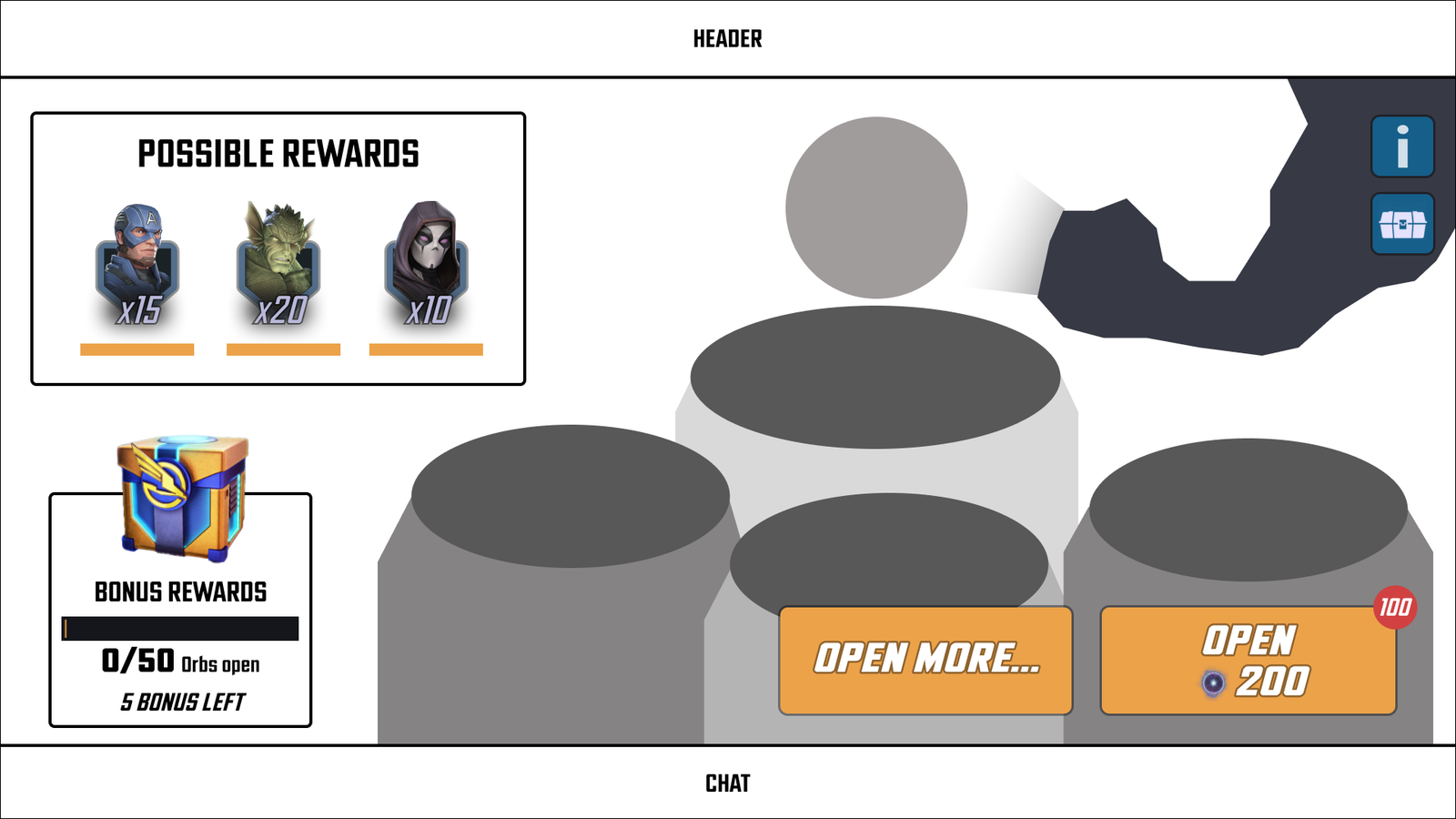
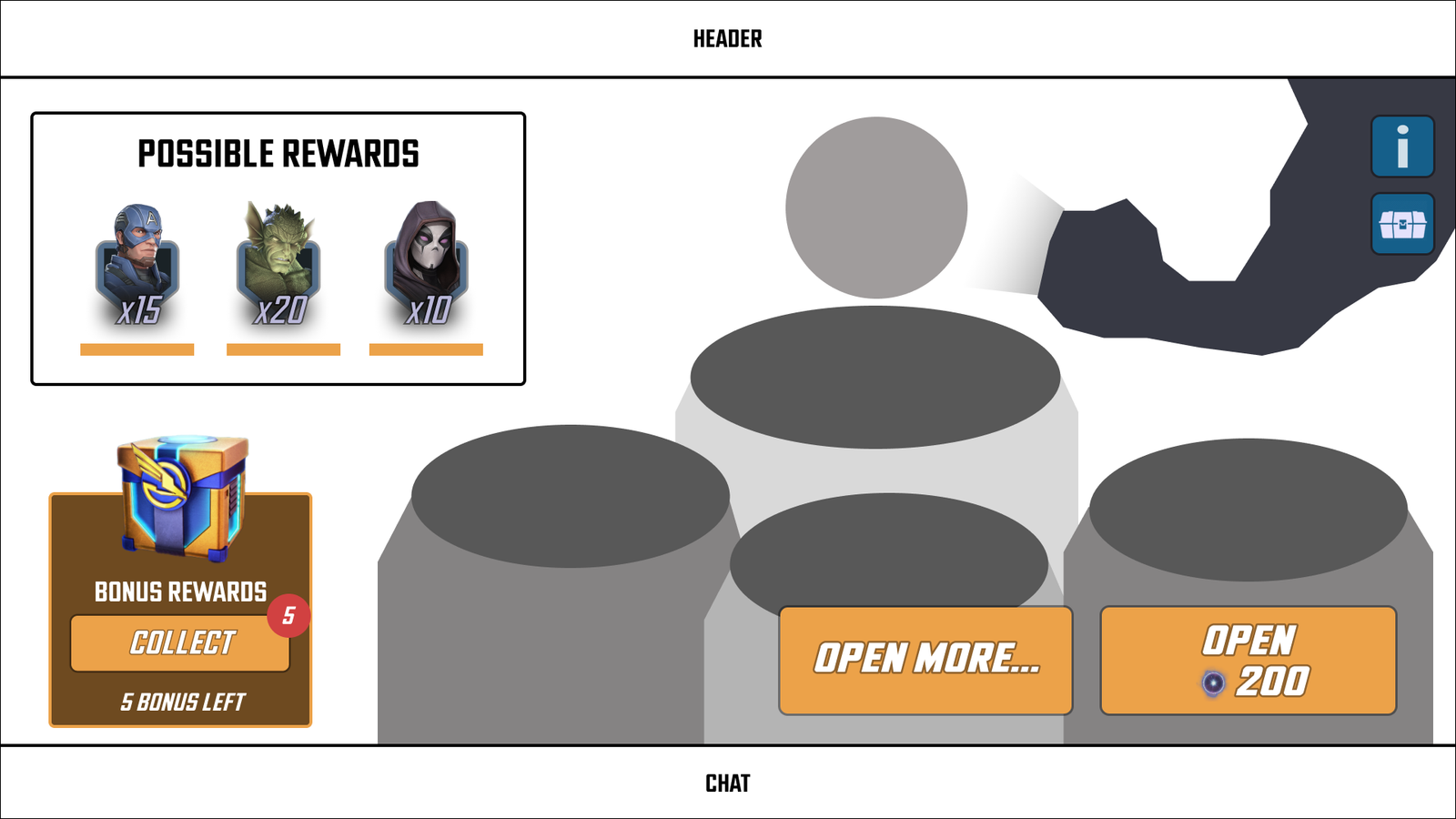
When a player opened an orb configured for the mechanic, that opening advanced its dedicated counter. At the threshold—set per orb—the player received a randomly selected reward from a premium pool. The mechanic did not change the odds of a specific character appearing in an individual opening; it guaranteed access to a premium reward at the milestone.
The number of milestones and the threshold could be tuned by Product, Design, or Business for each orb. The values shown in the design explorations are examples, not a fixed rule across every orb. When a threshold was reached, the counter reset whether or not the player opened the reward chest. Batch openings could cross several thresholds and surface multiple rewards at once.
03 / Design decisions
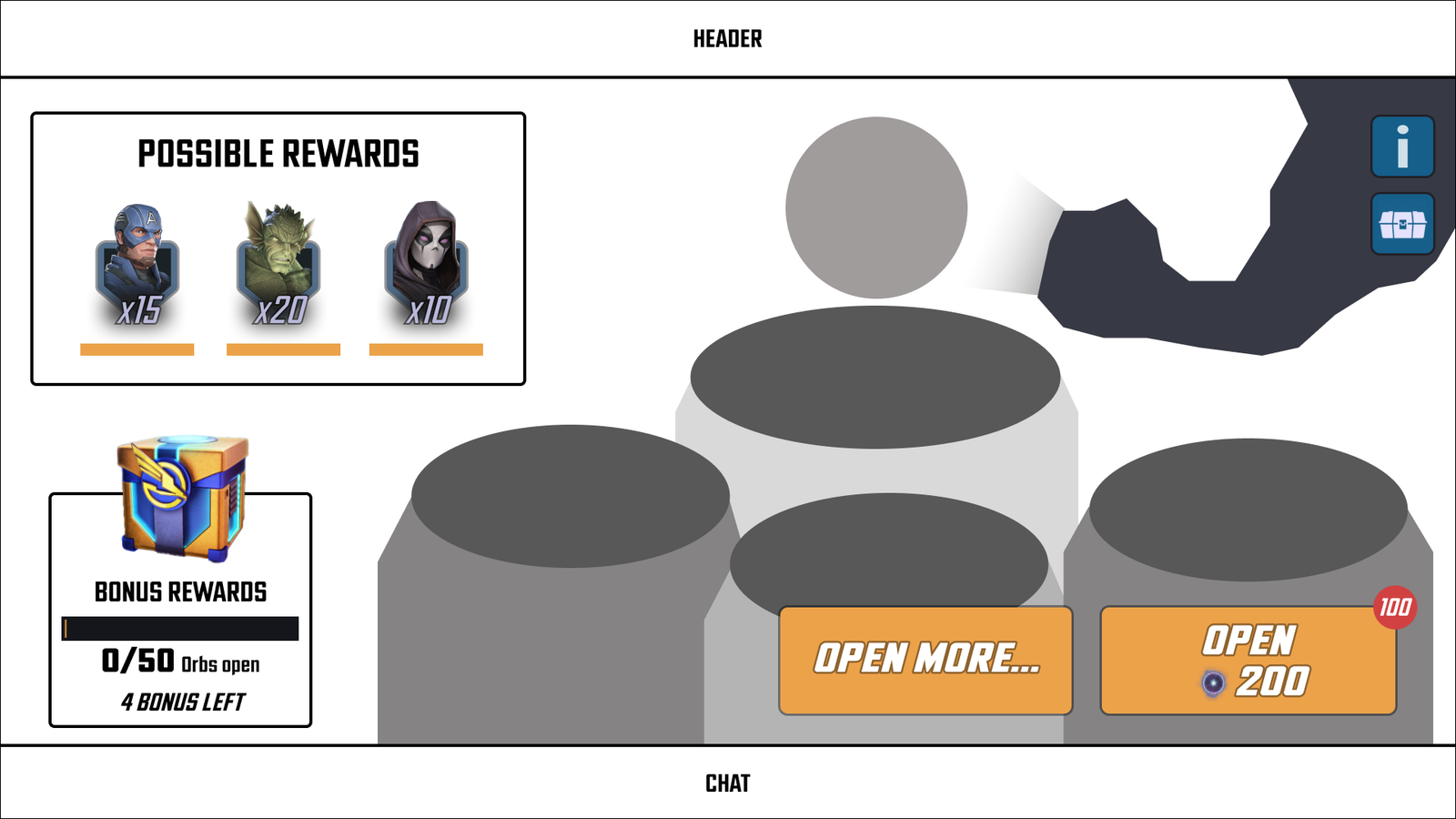
Fit the counter around a busy 3D experience
I owned the UX design of the mechanic, partnering with Product and Game Design on progression and reward balance, and with UI and Technology on how the experience could work inside the existing Orb Chamber.
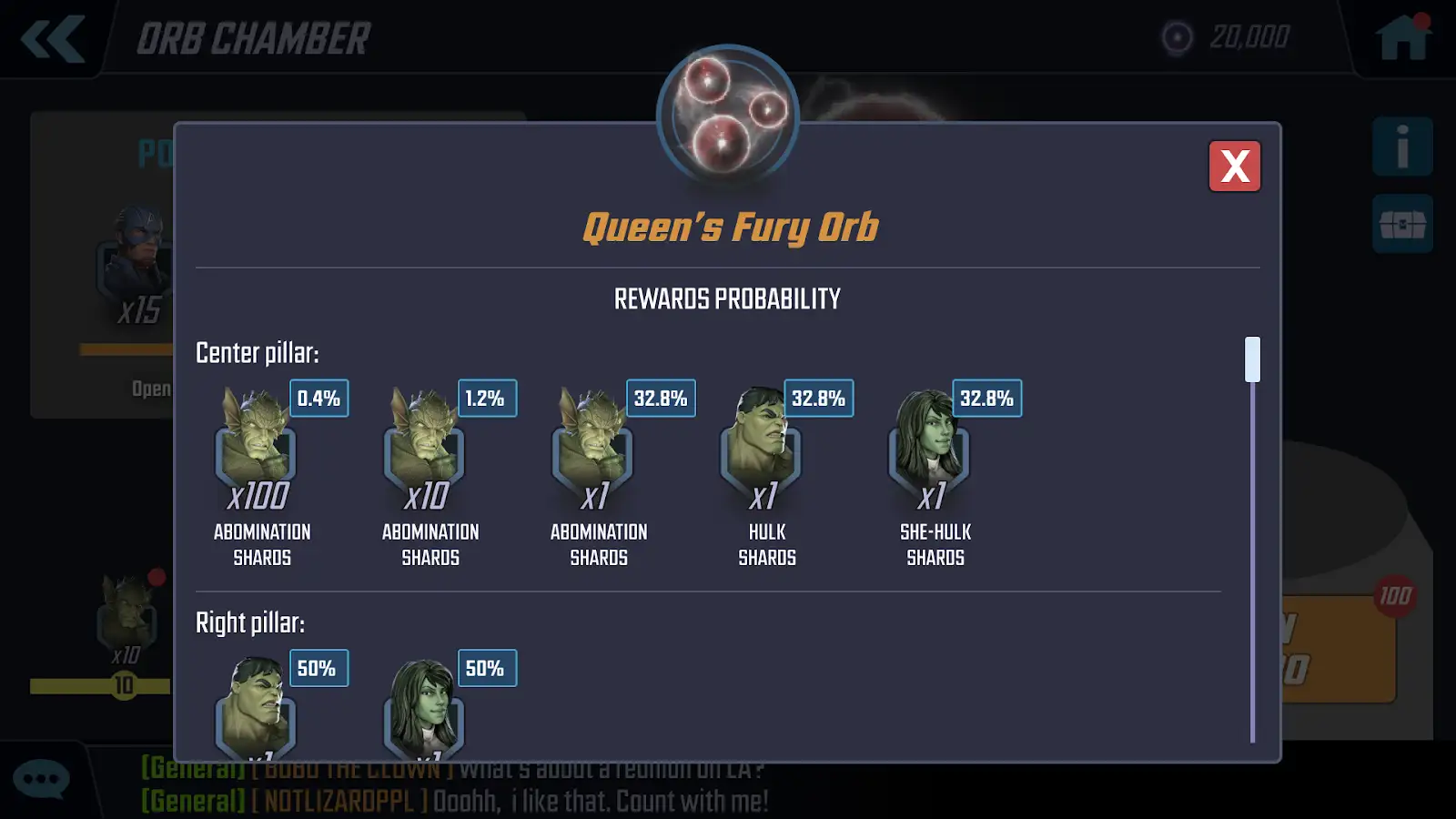
We explored a selectable premium reward because it could feel more attractive to players. But selection added complexity to the existing chamber and orb-opening flow. We chose a random reward from the premium pool: the milestone would guarantee the reward category, while the reveal preserved the system’s familiar chance-based rhythm.
Internal reviews compared several counter placements, whether to use a chest, and how to disclose the odds. Positions near the opening buttons competed with rewards on smaller devices. The final panel sat apart from the controls and possible rewards, and its chest opened the probability details.
04 / Measurement & learning
Design for the next visit, then measure it honestly
The intended readout was the number of players opening these eligible orbs daily and monthly, compared with earlier paid orb systems. We would exclude orbs earned through gameplay, so the comparison reflected the specific paid-orb mechanic. I left before launch and do not have verified post-launch results, so I’m not attaching a performance claim to the initiative.
What I took forward
I started thinking about product experiences as loops people choose to repeat—not only as one-time flows that end when a task is complete. The design question became: what gives someone a meaningful reason to come back?
Success metrics were planned; no verified post-launch lift is available to report.